Showing posts with label Theology. Show all posts

Tuesday, September 04, 2007

[THO] Kingdom of God - Preamble

Yup, as promised this is that new series on the Kingdom of God. It will likely be sporadic and in the next few weeks I'll be revisiting my original series outline. I'll definitely let you know if I plan on a wild deviation.

If you have been around the Freedom Log for a while you will hear me talk of the Kingdom of God a lot. I did a search and was surprised at how often it comes up. That has a lot to do with my denominational home, the Vineyard. Our movement takes the key insight of George Eldon Ladd (which I feel is actually an advance of Dodds even though Ladd takes pain to distance his idea from Dodds) that the Kingdom of God is an eschatological tension. It is the tension of this age and the next age, where this age is pregnant with the possibilities of the next age breaking in at any moment.

This is an important theology for us as it distinguishes us from similar movements like Pentecostalism or the Charismatic movement. It is how we understand the nitty gritty of Christian life, both the struggles and the triumphs. Even though it is so important I find that it is also something that gets lost as the movement grows beyond its Fuller roots. Fortunately the Vineyard in Canada has been working hard trying to ensure that these roots are nourished. Perhaps, in some way, this is my part in helping all of that.

I want to start with the language of the Kingdom. I am of two minds in this regard. On one hand I'm highly sensitive about how language can hinder the sharing of ideas. But at the same time I am convinced that distinct language has incredible value for the groups that adopt it. So here is also a tension. So I anticipate that I will take pains to clarify the language, identify the issues and then continue to go right on using the language of Kingdom. It is comfortable langauge for me, not that this is a reason for using a language, but it does evoke in me that sense of connection to Ladd and the heart of the Vineyard movement.

Hope that you enjoy the series.

Saturday, June 02, 2007

[THO] Antichrist

I spent yesterday reading Nietzsche's Antichrist, let me tell you he doesn't pull out any punches! I am giving a short presentation on Nietzsche's critique of Christianity Monday morning. I read a bit more than Antichrist, but the bulk of my analysis is from this work. I pulled out three key criticisms:

1) Christianity precludes the more rational atheism of Schopenheaur and Feuerbach.

This is interesting because from my reading on these young Hegelians, the Christian God is God in man's image. In fact Nietzsche's project seems to be a positive one of trying to adopt Schopenheaur's atheism without also taking up Schopenheaur's pessimism. But apart from my obvious objections to claiming atheism is the only rational option there is something valid about Nietzsche's critique. Christianity hasn't played well with the other disciplines, especially science. While we shouldn't have to sacrifice our theism to engage with science and philosophy, it seems that even in Nietzsche's day fear ruled this crucial relationship. Thank God there are those who have decided to broaden the dialogue partners of theology in our day.

2) Christianity focuses on an otherworld and ignores the natural world.

I've echoed this criticism many times on this blog. I don't buy Nietzsche's efforts to connect this to the slave morality of a vengeful priestly class, but it is an important criticism to consider. Are we too heavenly minded to be any earthly good? I think so. The track record of Christians in response to the environmental crisis is the strongest affirmation of this indictment. There is obviously a need for understanding the Kingdom of God, but it is too easy to miss that the Kingdom is a reality that breaks into the natural reality. It is too easy for talk of heaven to be a lotus causing us to miss the call of the prophets for justice and mercy.

3) The doctrine of sin prevents Christians from growing as moral individuals.

Nietzsche rails against the idea of pity. His concern is that this idea is used to make the claim of equality. Hence the slave morality is enforced and Christians remain content with their lot in life. While Nietzsche takes this in some bizarre directions, he is right that Christianity hasn't been good at developing whole, mature moral individuals. The problem is that we focus so much on personal sin that we miss that there is so much more to life. Nietzsche is heir to the Lutheran emphasis on personal sin, he knows what he is talking about here. We need to be careful not to miss the great themes of life and scripture, yes sin is part of that, but it is not all there is to the Christian life.

Nietzsche is a hard read, like I said earlier he doesn't pull his punches. While I am not convinced by his philosophy of morality, I do find his critiques worth wrestling with. Maybe I'll try something a little less inciting next time though.

Tuesday, March 13, 2007

[THO] Ceci n'est pas une pipe


Working hard on my papers I decided my light break reading would be Michel Foucault's little book "This is Not a Pipe". I barely broke the second chapter and I am struck by how well he describes the power of the aphorism. We go to such great lengths to reconcile discrepancies in our minds, we don't let them hang out in their paradoxical way and work their magic on us. We instantly say, of course this is not a pipe! It is a picture of a pipe, then we are done and can walk away undisturbed. Unfortunately we've completely missed the point and robbed the aphorism of its real meaning. I think this is why we can create such comfortable messages from the word of Jesus.

Jesus spoke often in aphorisms. Disconnected word pictures designed to shake us up and reveal the Kingdom. But when Jesus tells us the mustard seed grows into the biggest tree we don't cry out "bullshit!" we accept it and somehow construe that in Jesus day they must have desired these plants. But the reality is mustard is a weed. It spreads easy and grows into a shrub. But we don't like that kind of disconnect. It makes us uncomfortable (probably as uncomfortable as my use of the BS phrase made some of you).

I am often asked why people just don't get Jesus' message. We try to break it into simple moralisms or truisms. We want it to all match reality in a "reasonable" way. In doing so we rob the gospel of its power, a power to reorient us and break us out of the patterns of thinking that frankly no longer function for our good. The gospel is powerful if we are willing to let it linger untamed in our midst. Like any untame beast it will tear us apart, ripping away all that ultimately holds us back. We will stuff it into a cage, we always do, but the longer we can hold the tension, the longer we can allow the fangs of scripture to tear away our false ideas, the more transformative it will be. If someone told you God was safe, don't buy it. God is as dangerous as his Word, and the Kingdom of God advances with violence!

Sunday, March 11, 2007

[THO] Boehme's Panentheism

In preparing my paper on Jacob Boehme I have run into the pantheism/panentheism debate. Pantheism is pretty easy to understand, it is the idea that God is the sum of all that is. But panentheism is often confused with the heterodox pantheism even though nothing could be further from the truth.

For Boehme there is a wisdom (word) present in all things which has two functions. First it is the suffucing of nature with the divine giving the potential for salvation to all of creation, this he gets at using hermetic philosophy. But more importantly for Boehme, and others who take panentheism seriously, creation itself is able to convey understanding about God and life. Creation becomes a book of God. These ideas also come out in a panentheistic reading of the New Testament.

Boehme lived in the time when the Medieval Synthesis was crumbling. We were moving from a geocentric view of creation to a heliocentric view. And everything needed to be rethought. From a 21st century perspective many of Boehme's ideas seem quite profound and orthodox, but in his time cages were being rattled.

Thursday, January 18, 2007

[THO] Personal Salvation

I think it is NT Wright that has me thinking in this direction, but I have been reflecting today on just how important my relationship with God is. I know I love to talk about the social implications of grace and some pretty heady theology, but there is something that to me is vital about my relationship with God. I don't pretend to think I have a market on it, or to understand God completely. God knows my views have shifted over the years. But I do know I have a real connection with God.

I was reflecting on some of the language around panentheism that I've been meditating on recently. I love that language but there is the possibility that the God of revelation gets lost in all that. I have been involved in quite a few different spiritualities before giving my heart to Christ and none of them really scratched that deeper itch. In fact none of them left me with a personal relationship like the encounter that left me on my face in New Brunswick so many years ago. That isn't a connection with an abstraction, but with a person.

I felt it would be good to lay those cards on the table. That is central to who I am. I love Jesus, about the simplist way to put it. I don't love the Christian faith or Christian Spirituality (well I do, but that I love it as an after thought not as a primary motivator) - I love the God who met me in that gymnasium and arrested me (I was going to walk away). I love it when I sense God's presence near me. I love it when I hear God's voice speak to me. Those things are core to who I am and why I am so passionate about theology and worship. Consider it my bias.

I am willing to talk abstractly about it, if you've been here a while you have probably seen that more than once. I am even willing to go for critical distance to try to understand my experience better. But, I always end up back here, at the feet of Jesus lost in worship.

I just thought you all should know that.

Friday, October 13, 2006

[THO] Much To Write About Nothing

We did Rahner yesterday in Grace, actually the first half of the class was on Rahner's teacher, Martin Heidegger. I couldn't remember if I had actually read any yet, I have a Basic Writings and a standalone copy of "The Question Concerning Technology" on my shelf. I know I carried a print out of "What is Metaphysics" around one semester. It is usually wishful thinking that I will get time to read outside of material directly tied to my courses. The class was so fun that I decided to re-read "What is Metaphysics" which is also conveniently in my reader. I'm almost done this short piece, and it is hilarious. I believe the prof, Ken Melchin, used the term INSANE. The whole article is about nothing. Not that it isn't about anything, no specifically it is about nothing.

The whole class had me reflecting again on this turn towards the subject that I discussed a week or so ago. Heidegger is an important turning point in thinking, his thought influences much of our own yet I bet, other than those studying theology and philosophy, his name is not that well known. He is the one who tried to capture what it is that we are experiencing when we are experiencing and even the why we would be inclined towards experience at all. This is that turn to the subject that flew in the face of object focused scholasticism. The article I'm reading is Heidegger having a lot of fun with these kinds of a priori questions. (At least I imagine this was fun, then maybe I too am just a little INSANE as well.)

I updated the blog a bit, added and sorted links (deleted a few too). Also added a spiffy text of the day in Greek at the bottom. If you don't use it you lose it - I'm two years from being able to take the advanced Greek class (for some reason they decided to make it a grad class???) and that is one I definitely want to take because two semesters of Greek is just enough to make you dangerous.

Back to nothing!

Monday, October 09, 2006

[THO] New Series on the Kingdom of God

I want to jot down some thoughts for my next series. Don't worry, I'm still working on the Worship series. But over and over this semester I am confronted with the theology of the Kingdom. So I want to deal with some of the key areas that are coming up.

Kingdom I - How shall we talk of the Kingdom of God

  • What are some of the problems with talking about the Kingdom of God as a contemporary Christian. How can we overcome some of the various problemmatic conclusions people make about the Kingdom langauge. I especially want to deal with the language of inbreaking. I'm likely doing a whole paper on this for my Ecclesiology course so this will be a good starting point for me.

  • Kingdom II - Kingdom Ecclesiology
  • I really need to explore the relationship between the Kingdom of God and the Church.

  • Kingdom III - Kingdom Ecology
  • Shane found resources in Pentecostal Pneumatology to address the ecological crisis, I think there are resources in Vineyard Kingdom theology to let us do the same.

  • Kingdom IV - Kingdom Ministry
  • Ok let's put this all together. When we talk about the Kingdom of God we are talking about a theology that undergirds everything we do as a Kingdom people. That is what I want to explore here.

  • Kingdom V - How shall we talk of the Kingdom of God
  • I think this is worth revisiting. In light of everything we explore I want to come back to our foundational problem - how we talk about the Kingdom of God. I have some suspicions* but I want to provide a space to sum up the discoveries.


  • If you have ideas that might get me thinking in any of these directions, please throw them my way.

    *Just to let you in on my biggest suspicion. I think the the language Kingdom of God will be better expressed as the Reign of God both in terms of faithfully representing the greek and avoiding some of the problems that evoking the language of Kingdom presents.

    Friday, October 06, 2006

    [THO] Eastern Thinking is Frustrating

    OK so I am digging into my second text for this Foundations in Eastern Theology course, the first one was a horrible book called Sweeter than Honey. But this next one is the same sort of crap. It is odd because I read lots of stuff I disagree with and it doesn't affect me like this. I was reading a synopsis of Rahner's idea of the Anonymous Christian, something that I am not really connecting with but I love reading and thinking through his ideas. But when I get to the Orthodox text I just find myself getting madder and madder? Then it hit me what the difference was. Rahner expects you to approach his work critically. There is no assumption that he has it right and you have to agree with him. But in the Orthodox books I've read so far disagreeing is not an option. I had this same problem with Mikloshazy's Benedicamus Domino! which was the first assigned text I refused to finish. I am just not interested in someone telling me that I've got it all wrong. I would love someone to show me the problems in my thinking, I am totally down with that, but there is just an arrogance in this stuff that I cannot stand at all. Anyway, I still have hopes for Schmemann, if anyone knows of a good, humble Orthodox theologian that I should read then let me know. I would hate to just have a negative opinion of Eastern theology.

    Tuesday, October 03, 2006

    [THO] Turn to the Subject

    Professor Eaton did this amazing thing at the break. A student in my class was having trouble with separating her own experience of 'redemption' with a wider context of thought about redemption - specifically what does it mean to think about redemption in relation to the natural world? I've seen this discussion of experience before, but forgot how profound it was. It is something that I've learned to do, but never really thought about how to verbalize. So here is my attempt to put it in simple terms. But the credit for this must go to Heather Eaton; I'm paraphrasing here.

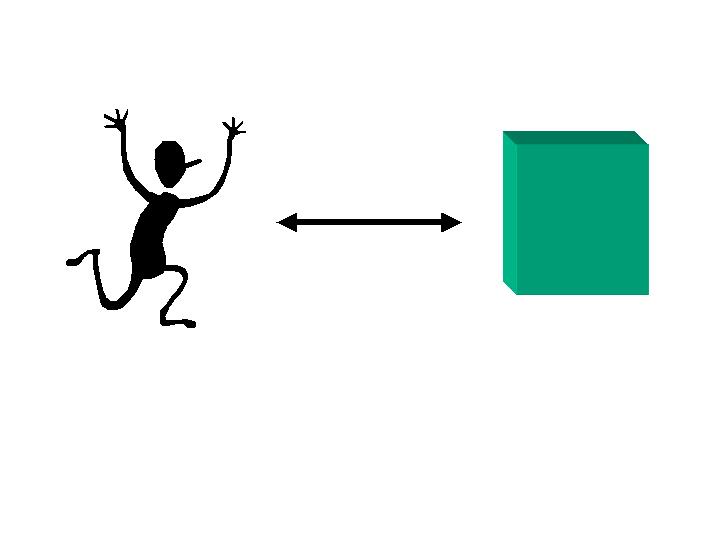
    When we have an experience, that experience consists of two parts. The actual experience of which we are the object. A good example for the evangelicals is the born-again experience, but we could use any transformative or horizon shifting experience here. On the left is the person who has the experience, on the right is a box which represents the context and langauge in which the experience happened. When we have an experience we often don't think about the context in which that experience occured.

    The reality is that both the subject and the object are intimately entwined in the experience. You have an experience in the midst of a context, complete with a language to wrap around that experience. The experience becomes indistinguishable from the language and context in which it occurs. So when you talk to a born-again Christian about their conversion they use a context specific language to talk about it. What is also interesting is that often they refuse to equate similar experiences in other traditions simply on the basis of dissimilar language.

    What we need to do is learn how to separate the experience from the context without invalidating the experience. This is hard for people who have invested a lot into their contextual language. That is quite understandable, anyone who has had a life transforming experience knows the joy of wanting others to have the same experience. But we can easily do violence to other valid experiences simply because the language is different. It is important to understand that the language of the context is the problem here, not the experience itself. So by pulling the two apart we even get a clearer understanding of what that experience really did shift within us. And when we put them back together we gain a new ability, that of being able to speak carefully about our experiences. What I mean by carefully is not hiding the experience, rather not feeling that we need to define our experience in narrow and often exclusive language.

    When I first encountered this, about six years ago, I described it as surgically removing my faith, examining it and then re-inserting it into my being. At first this can be very painful, we become afraid that if we lose the langauge of an experience we might lose the experience. But having engaged in this for a number of years now I can see that it is really essential. In fact it realizing this is almost like another conversion experience. It makes us what Professor Eaton calls "ecumenically elastic". We are profoundly rooted in our real experiences, but we develop a fluidity to which we can begin to speak of them and even affirm them when we see religious experience in a completely different context.

    Tuesday, September 26, 2006

    [THO] Eastern Rose Coloured Glasses

    I am surprised, no slightly shocked, how Eastern Christianity seems to have a warm and fuzzy attitude towards things that should be shocking. This has to be a byproduct of their epistomological starting points. There seems to be a basic assumption that old is better which I find troubling, to say the least. A lot of movements begin with an incredible romanticism for the past, "we are building the pure New Testament church!" But these romantic notions do give way to reality as the movement grows up. But it is exactly this that I find in the Eastern Church. Don't get me wrong, I love some aspects of the Eastern Church, especially their sense of mystery. But to affirm the heirarchy as some from of godly community betrays its entrenchment by Ignatius as a reaction to the problem of church governance. Worse, Eastern writers like Bouteneff (Sweeter than Honey) even want to compare the Trinity to the Hierarchy - wasn't Sabellianism condemned by their own councils? But I can get over mistakes in structure and thoelogy - it is how the language to describe these aspects is filled with glowing wonder that bugs me? But maybe I just don't get it. I'm sure Bouteneff doesn't speak for all Eastern Christians. And I must say that I appreciate that they hold the Patristic tensions intact, they live with the tension of a complicated dialogue which is admirable. But you would think they would carry that same spirit on and bring something fresh to the ongoing conversation of theology. For better or worse the early church fathers were not afraid to engage with their contemporary culture and philosophy. Even though there is much I disagree with in their writings I don't think they would be happy with the fundamentalist posturing of the Eastern Church. But perhaps the lesson they took from the confusion of the past is that it is safer to "have all the answers". How many protestant movements are guilty of the same mode of fear? Maybe we aren't as far apart as it first seems? Maybe this is why it so truly bothers me.

    God save me from my own pride of knowledge. God forgive me for thinking I have such a firm handle on truth. Lord come and show Yourself strong, break the back of all arrogance in your Church. Lord, we all need you. Amen.

    Monday, September 18, 2006

    [REV] The Hallelujah Revolution

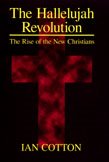
    My first instinct is to tuck this book back on the shelf and forget I ever read it. Not that it isn't good, it definitely wasn't a hard read. Well, not hard to read, it was hard in the sense that it was too close to home for this Charismatic. I think Ian Cotton's synicism was meant to be funny, but for someone who has lived, enjoyed and at times been embarassed by charismata, this book is too familiar to be funny.

    I appreciate his effort to present what he calls the New Christians as both well intentioned and off their rockers. New Christians are those pentecostal and pentecostal influenced evangelicals that emerged in the late 70s and early 80s. The movement that spawned March for Jesus and a tonne of social initiatives in England and around the world. It is a fascinating study of the culture I am familiar with and it is always interesting to get a different perspective on the life you live. However, that said Cotton does not seem to have run into what I would call the best that world has to offer. But he does get the gamut from good to horrid.

    What is most troubling though is that halfway through the book he begins to focus on the charismatic experience. He is looking at what factors lead a society to be more spiritually activated, I mean in an ecstatic fashion. In fact he does a decent job of the ebbs and flows of religious life in the West. He investigates the ties between right and left brain experiences and spiritual encounters, that is quite interesting especially when he ends up in Sudbury testing out a machine that stimulates the right hemisphere inducing "supernatural" experiences. I found this troubling, I think I should have, as I am inclined to have such experiences. While I don't think I was a classic case subject, there are some ties. I am more right brained to begin with. But the whole area of the psychology of ecstatic spirituality is something I think would be worth investigating. If we could understand the psychological mechanisms more then we might be less inclined to use systems of hype to try and "force the hand of God" so to speak.

    So I wouldn't recommend this book to anyone who is struggling with their charismatic faith. But I would think it useful for a mature reader who is interested in that movement. Especially in how charismatic folks sometimes fall into the flakier end of things. Meanwhile, I'm tucking it onto my shelf and moving onto other things.